




After a month of sharp declines (April), all indicators in the May balance sheet for the machinery and equipment sector were positive. Of particular note were exports, which rose by 35.7% compared to the previous month, and imports, which rose by 27%. Compared to May 2022, the figures are also positive: 22.2% for exports and 4.7% for imports.
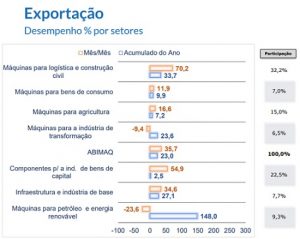
Exports for the month totaled US$1.3 billion. This is the highest export volume recorded by the mechanical capital goods sector since 2012. According to data from Abimaq, which presented its monthly report last week, the sector recorded cumulative export growth of 23% from January through May. “This, once again, helped mitigate the decline in domestic sales. During the period, according to data from Funcex, exports measured by volume grew by 11%,” the association reported.
All segments analyzed by the organization posted growth in exports, particularly manufacturers of machinery for logistics and civil construction, which account for approximately 30% of the sector’s total exports, marking a 33.7% increase over the cumulative total for the first five months of 2022. Another segment with significant results was that of oil extraction equipment manufacturers, which recorded growth of 148%, coming to account for 9.3% of total machinery and equipment exports.
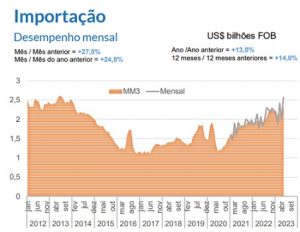
Import – Total imports of machinery and equipment in May amounted to US$2.6 billion—twice the value of exports. From January through May, imports rose 13% compared with the same period in 2022.
Virtually all the segments analyzed saw an increase in foreign purchases, with the exception of machinery for infrastructure and basic industries (-12.3%). There was growth in imports of machinery for the manufacturing industry, logistics and construction, consumer goods manufacturing, agriculture, and the oil industry. “Imports of components—goods used for replacement parts and also in the manufacture of capital goods—also grew during the period (+8.8%), now accounting for nearly one-third of Brazil’s imports of machinery and equipment,” the organization noted.
Recipes – In May, sales in the sector rose by 10.5% compared to the previous month. But that’s where the good news ends. Compared to May of last year, sales fell by –15.6%, widening the year-to-date decline (-8.5%) and the decline over the past 12 months (-7.3%). According to Abimaq, in this type of comparison (last 12 months), this was the 10th consecutive decline.
In the domestic market, sales rose 4.1% in May compared to April. However, compared to May 2022, there was a decline of 23.2%.
According to Abimaq, the decline in total revenue also stemmed from the domestic market. “Cumulative performance from January through May 2023 was 14.3% lower than that of the same period in 2022 in the domestic market, while exports grew by 15.2% when measured in reais (in dollars, the increase was 23%), which reflects the exchange rate effect for the period.”.